Governor Peter Mbah says landmark energy project will deliver stable electricity, attract industries, create jobs, and transform Enugu into a $30 billion economy within two years.

Enugu State is preparing for what could become one of the most ambitious energy projects in southeastern Nigeria after the state government officially announced plans to construct a massive 660-megawatt coal-fired power plant aimed at tackling electricity shortages and accelerating industrial growth.

Governor Peter Mbah revealed that groundbreaking for the project will begin in July 2026, with the administration targeting completion and commissioning within 24 months.

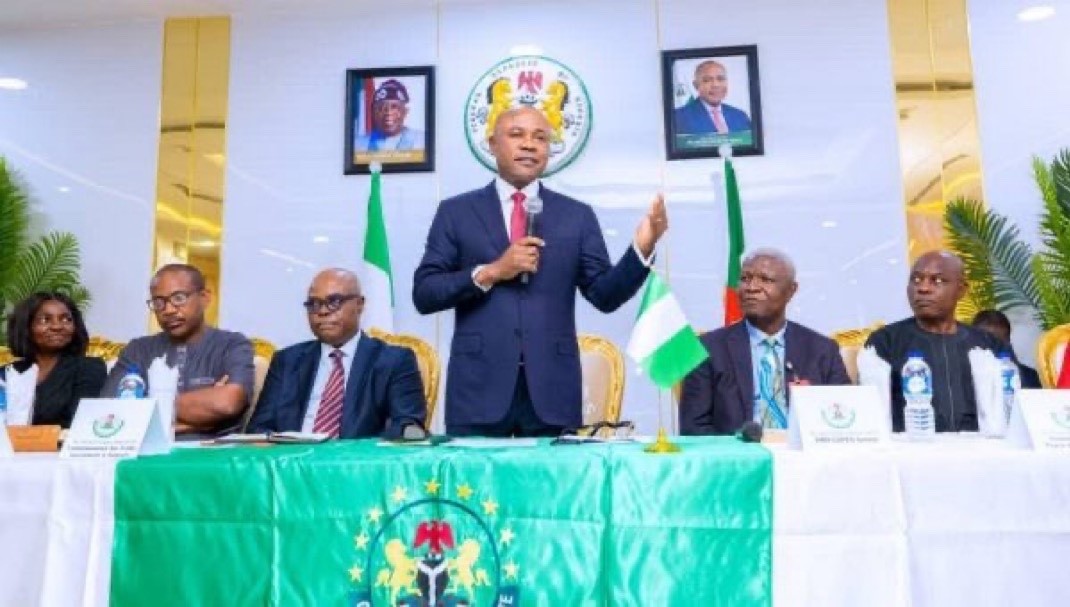
The governor made the announcement while receiving a delegation from the Organised Private Sector Nigeria (OPSN) at the Government House in Enugu, describing the project as a strategic investment designed to reshape the state’s economic future and provide reliable power for businesses and residents.

“I am pleased to inform you that in July we are going to be breaking ground for a 660MW coal-fired power plant,” Mbah said. “The target is to commission that power plant 24 months after the groundbreaking.”

The planned facility is expected to tap into Enugu’s rich coal reserves, resources historically linked to the state’s economic identity dating back to Nigeria’s colonial era. Officials believe the project could significantly reduce dependence on unstable national grid supply and costly fuel-powered generators that continue to burden industries and households across the country.

The announcement comes at a time when Nigeria’s power sector remains under intense pressure due to recurring grid collapses, inadequate generation capacity, and rising energy costs. Analysts say the project could position Enugu as a major regional energy hub capable of attracting manufacturers, technology firms, and large-scale investors seeking stable electricity.

Governor Mbah said the power initiative forms part of his broader economic transformation agenda aimed at expanding Enugu’s economy from about $4.4 billion to $30 billion through infrastructure development, industrialization, and private sector investment.

Private sector leaders welcomed the development, with representatives from NECA, MAN, NASSI, NASME, and the Enugu Chamber of Commerce reportedly expressing confidence that stable electricity would unlock new business opportunities and improve competitiveness in the Southeast.

The state government also indicated that modern power-generation technologies and environmental protection measures would be incorporated into the project to improve efficiency and minimize environmental impact associated with coal-based energy production.

Although details regarding project funding, technical partners, and the exact location are yet to be fully disclosed, expectations are already growing that the initiative could become one of the largest subnational power projects in Nigeria.

For many residents and business owners, the project represents more than just another infrastructure announcement — it is being seen as a possible turning point in the long-running struggle for reliable electricity in southeastern Nigeria.

Share.
Leave A Reply

Exit mobile version